
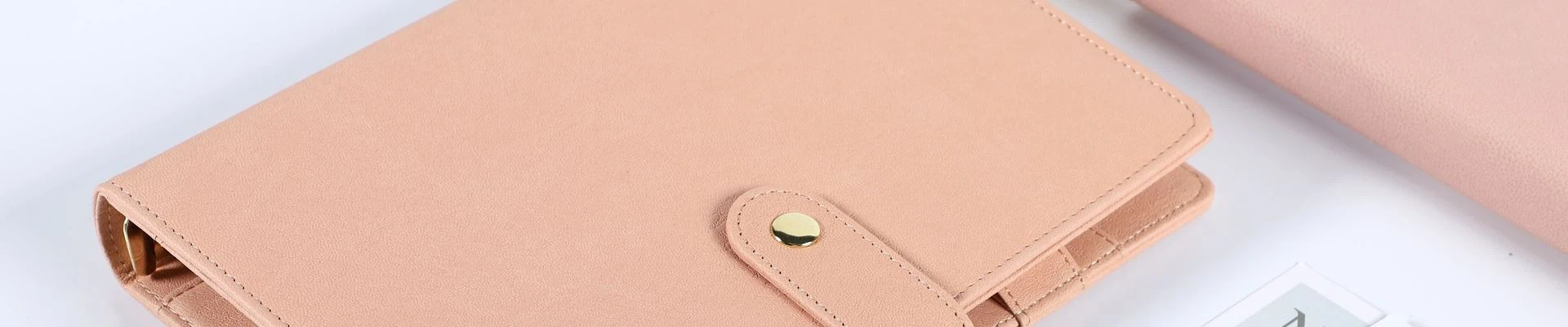


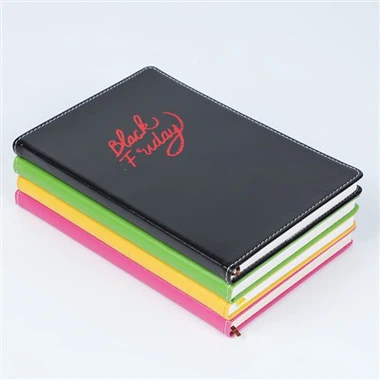
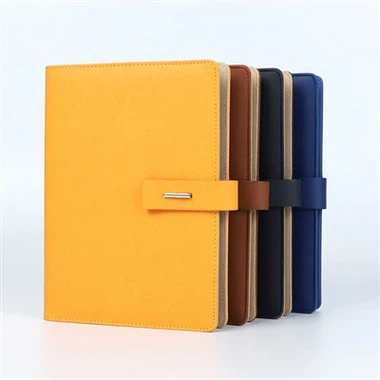
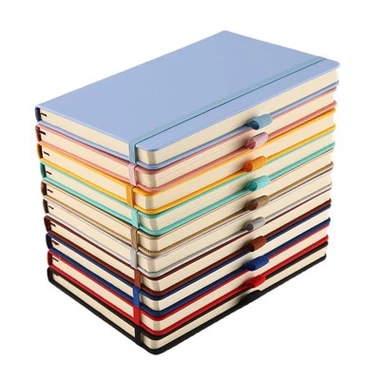
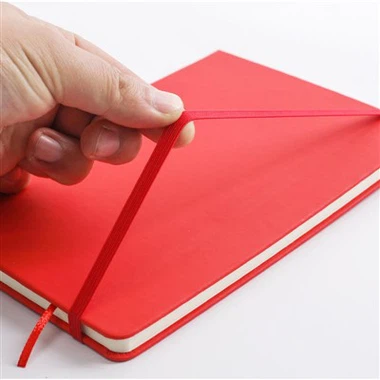
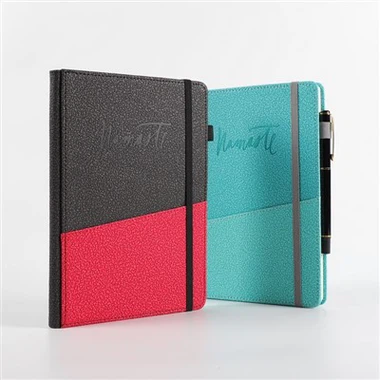
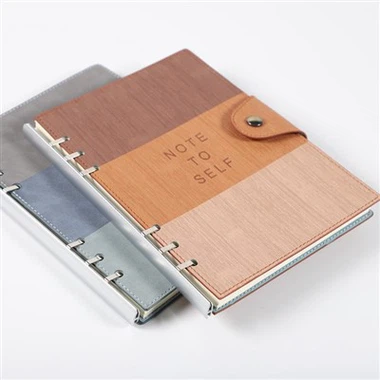
A leather journal is a journal that is bound in genuine or artificial leather. Leather journals can be made with lined or unlined paper, and they can be used for writing or sketching. For optimal creative use, some notebooks are created with both lined and unlined paper.
Benefits of Leather Notebook
A Touch of Elegance
Leather journals exude an unmatched elegance and sophistication. The rich texture, the subtle scent, and the overall aesthetic make these journals a perfect accessory for any setting. Imagine pulling out a leather notebook at a meeting or while sitting in a cozy café. It’s not just about the function; it’s about making a statement.
Durability that Lasts
One of the main reasons people opt for leather journals is their durability. Unlike paperbacks or plastic covers, leather can withstand the test of time. Your notebook journal will be there for you through thick and thin, aging gracefully and becoming a cherished keepsake. Think of it as an investment in your thoughts and memories.
High-Quality Materials
We pride ourselves on using only the finest materials. Our leather notebooks are crafted from premium leather, ensuring they are both beautiful and durable. Whether you choose a large notebook for your detailed projects or small notebooks for quick notes, you can trust that you’re getting top-notch quality.
Variety to Suit Every Need
We understand that everyone’s journaling needs are different. That is why we provide a broad choice of solutions. From unlined journals for those who love to sketch or doodle to lined notebooks for traditional note-taking, we’ve got you covered. Our selection includes large notebooks for extensive writing and small notebooks that are perfect for on-the-go jotting.
Improve Mental Health
It can help you process your emotions, reduce stress, and provide a sense of clarity. Imagine having a trusted companion in the form of a leather notebook, ready to absorb all your worries and joys. It’s like having your own personal therapist available.


Why Choose Us
Competitive prices
We offer our products at competitive prices, making them affordable for our customers. We believe that high-quality products should not come at a premium, and we strive to make our products accessible to all.
Rich experience
Has a long-standing reputation in the industry, which makes it stand out from its competitors. With over many years of experience, they have developed the skills necessary to meet their clients' needs.
Efficient and convenient
The company has established marketing networks around the world to provide high-quality services to customers in an efficient and convenient manner.
Fast delivery
Strong production capacity, Complete packaging ensures product quality and is shipped to the destination in the first time.
High quality products
We always put customer needs and expectations in the first place, refine on, continuous improvement, to seek every opportunity to do better, to provide customers with their expectations of quality products, to provide customers with the most satisfactory service at anytime.
Customer satisfaction
Providing after-sales services can enhance customer satisfaction by ensuring that customers' needs are met even after the purchase. This can lead to increased customer loyalty and positive word-of-mouth referrals.
Making a Leather Journal
Creating the signatures
The first step in making a journal, is to decide how many pages you want to bound, and then dividing them into signatures (unit of folded pages that will be stitched). For instance, if you wish to have 50 sheets in your book, you might want divide them into signatures of 5, each signature having 10 pages. Different types of paper can be used however I preferred to use acid-free parchment paper for the texture and look of the journal.
Preparing the leather
Different thicknesses of leather can be used and this will be entirely up to you. You can purchase boxes of scrap leather from Amazon for less than $25 dollars. For this project, a thick vegetable tanned leather was used to give it the durable and thick appearance I wanted. The leather was cut to leave approximately 1/2 inch of leather bordering all of the pages. Once the leather has been cut, you will notice that the leather can have some fraying of fibers from the cut edges. This is where you will use an edge beveler to clean up all of the edges of the leather, giving it a nice and finished appearance.
Preparing the leather for stitching
In order to assure that all signatures are sewn at a consistent distance from each other, I created a template. This way, all holes will be exactly where I want them to be positioned on the leather. Also, in the future if I decide to create a leather journal with similar dimensions, I could easily use the same template. Depending on the thickness of the leather, this task can be a little time consuming. I initially made the holes with a stitching awl, and then subsequently widened them with a thicker needle and hammer. Needle nosed pliers were also used to help pull the needle through the holes. Once you are satisfied, the leather can also be softened at this stage. This can be accomplished in many ways. One method is simply to manually flex the leather to give it a more broken in feel. Another way is to use rubbing alcohol on the leather and then add petroleum jelly to penetrate the leather.
Staining
This can be accomplished with a variety of different stains and colors. I decided to use a stain from Ecoflow called acorn born. It is important to use an old clean cloth for this step to assure that you rub the stain evenly throughout the leather. If not, the stain will be absorbed more readily in some areas of the leather than others, causing an uneven appearance. This may not be a bad thing, as some of you may opt for this appearance.
Stitching the signatures
Stitching was completed using a thick waxed thread designed specifically for leather use. This was a lengthy process considering I had 8 signatures to sew in place.
Why Choose a Personalized Leather Journal
There are many reasons why choosing a personalized leather journal over a regular one can enhance your writing experience
Unique & Customizable
By adding your name or initials to the cover of the journal, you create an item that is truly unique and reflects your individuality.
Durability
Leather journals are known for their durability and ability to withstand wear and tear. This ensures that your memories will be preserved for years to come.
Aesthetic Appeal
There's no denying that leather adds an element of sophistication and elegance to any object. Choosing a personalized leather journal not only elevates its aesthetic appeal but also makes it stand out from other generic notebooks.
Emotional Connection
Writing in a personalized journal creates an emotional connection between you and the book itself. It becomes more than just pages filled with words; it becomes an extension of yourself.
Great Gift Idea
A custom-made leather journal makes for an excellent gift idea for loved ones who enjoy writing or appreciate thoughtful presents. You can choose from different colors, styles, fonts, etc., making it both practical and sentimental.
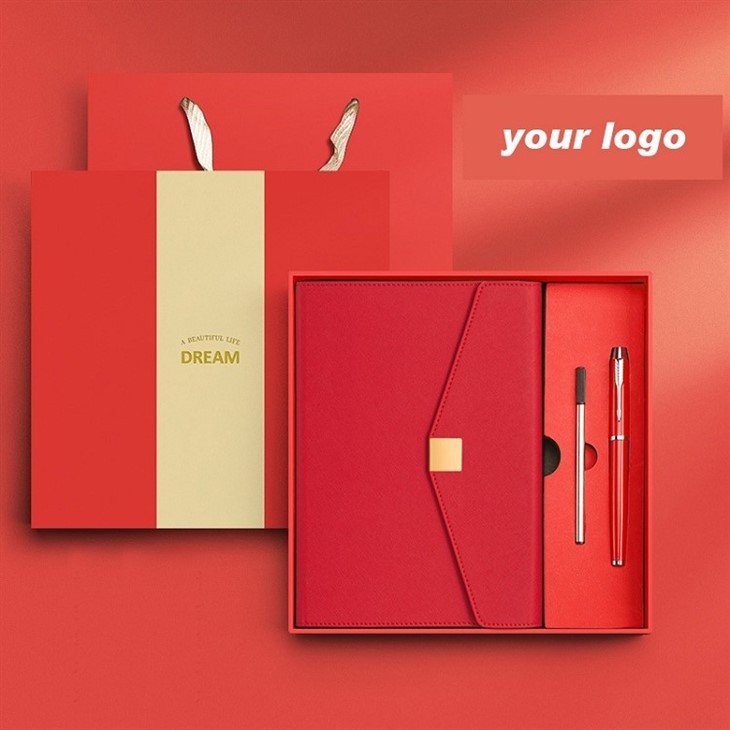
You can use a leather journal for just about anything. From keeping notes and sketches to write down important information, this handy tool is the perfect companion for any adventure.
A leather journal should last you a lifetime, but if for some reason it doesn't, you can always get another one. It's easy to find new journals online or in stores so don't worry about having to do without when your current one wears out! Leather goods are made with excellent craftsmanship and high-quality materials that make them strong enough to withstand even the roughest treatment - whether that means being stuffed in your bag on an airplane or getting buried under some heavy books at home.
Leather journals also make great gifts because they're functional yet still stylish enough to display proudly on someone's desk or nightstand table! If you're looking for something both personal and practical then look no further than this timeless accessory that'll never go out of style (but hopefully won't go out either).
How to Make a Leather Notebook Cover
Cutting the Pieces
Using your utility knife and steel ruler on a cutting mat for fixed blades, cut the following pieces of leather:
(1) 8.5″ x 6″ cover piece
(2) 6″ x 3″ flap pieces
(1) 4″ x 2.25″ card piece
(2) 2″ x 1″ pen tabs
Skiving the Pen Tabs
Skiving is the process of thinning a piece of leather so that when layers of leather are stacked on top of each other, the resulting thickness is thin enough to sew through with your machine. There are many tools that can be used for skiving, but the easiest and safest to use as a beginner is a Super Skiver (link in materials list above). It takes a little bit of practice to get this right, so I suggest trying it out on a few scrap pieces to start.
Using your skiver, remove a thin layer from the back side of each end of each pen tab. Your aim is to remove about half the thickness of the leather from the last 1/2″ of each end of the pen tabs. This way when they are folded in half to make a loop, the end of the loop is only the thickness of one layer of leather. You are basically shaving away thin layers; this sometimes comes off looking more like sawdust than a layer depending on the type of leather you use.
Attaching the Card Pocket
As an added optional detail you can cut a small notch out of the long edge of the card pocket. You can do this either with your utility knife or with a belt end punch. This will make it easier to remove a card from the pocket. You can also use your corner rounding tool to round the bottom two corners at this point if desired.
Place a strip of double sided tape on the back side of each of the short sides of the card pocket, as well as the long side of without the notch. Press the tape down well.
Peel the paper side of the tape off, and place the pocket in your desired location on one of the flaps.
With a leather needle, upholstery thread, and an appropriate foot loaded onto your BERNINA, edgestitch the pocket down to the flap. Remember to set your stitch length to at least 3.5 (I used 4.0). If your machine has a speed setting, slow it down to the lowest setting possible. You may also need to tighten your top tension. Start at the top of one short side, stitch down and across the bottom, and back up the other side. Back stitch at the beginning and end.
Notching the Flaps
Before they can be attached to the cover, the flaps need to have notches cut out of them to accommodate the pen tabs.
Lay the two flaps down on your cutting mat, making sure the flap with the card holder has the opening for the card facing to the LEFT (this is the opposite way it will be placed on the cover). On the RIGHT long edge of each flap, measure down 2″ and mark this point (I use an awl to do this, but you can also make a small scratch with any hard object such as a pin, nail, etc).
Measure down 3″ and mark.
Using your utility knife, cut a 1/4″ deep notch on each flap between these two points. You can use your steel ruler to make sure the cuts are straight.
Prepping Cover for Stitching
On each pen tab, put a small dab of leather glue on the back side of each end. Let the glue dry slightly until it is mostly clear so that it is tacky.
Fold the tabs over to make loops, pressing the glue together. You can put a Clover Wonder Clip on this spot to allow the glue to set, but it doesn’t take long.
Place the flaps onto the cover, wrong sides together, with the notches in the flaps towards the outside of the cover. Mark where the edge of the flap stops, so you will know how far to glue on the next step.
Flip the flaps over so the wrong side is up. Spread a very thin and narrow layer of glue on the two short edges and the long side with the notch. DO NOT glue the long side with no notch. This needs to be left open for the pocket to work. You can spread the glue with your finger (if using a natural glue like Bish’s) or with any small plastic tool.
With the wrong side of the cover up, spread a very thin and narrow layer of glue between each mark that you made in the previous step.
When the glue has dried slightly and is clear and tacky, place the flaps onto the cover, wrong sides together, one edge at a time, notches to the outside, being very careful to line up the edges as you go. This glue works like contact cement, so you only have one chance to get it right. If you haven’t done this process before, you may want to try it out on some scraps. Press the flaps down firmly.
Final Assembly
Return to your BERNINA. Edgestitch each flap down to the cover separately along the outside edge. Make sure that the front of the cover is up, as that side of the stitching will look best from that side. It is a little more difficult to see where to stop and start this way, but it is worth it for the results. As you come to the notch, place a pen loop tightly into that space and continue stitching. Make sure the loop is lined up well as you stitch. Backstitch at the beginning and end of each flap.
And that is it! Your leather Field Notes cover is complete! Insert your favorite pen into the loops which will keep your cover closed when not in use. As an extra detail, you can use metal stamps to emboss initials into the front cover for a special detail.
Uses of Leather Notebooks
Daily Records
Leather notebooks are often used for daily records, recording trivial details, thoughts and inspirations in life. Whether it is to record daily task lists, ideas or the use of fragmented time, leather notebooks can be a good partner for you to record bits and pieces of life.
Handbooks
Handbooks are a way to record big and small things in life, moods, plans and other contents, and leather notebooks are a good choice for handbooks. The texture and appearance of leather make the handbook more quality. The luxury and personalized customization of leather notebooks can make handbooks more personalized.
Travel Records
During the trip, leather notebooks can help you record bits and pieces of your journey, such as what you see and hear, food and culture during the trip. The durability and beauty of leather notebooks can allow you to record the memories of your trip more deeply and leave more meaningful memories.
Creative Painting
Leather notebooks can be used not only for daily writing and recording, but also for creative painting. Sketching, graffiti and hand-painting can all be done on leather notebooks, which perfectly combines creativity and beauty. The texture and touch of leather notebooks can allow you to better feel the fun of hand-made, creating an experience completely different from electronic records.
Caring For Your Leather Journal
Our journals are beautiful, hand made and leather bound so we want to give you some tips on keeping them fresh and looking new for longer.
Firstly, it's important to keep your journal out of direct sunlight. The UV rays can cause the leather to fade in colour. Any colour of leather can be affected over time when exposed to too much sun. This happens due to the sun causing the natural oils found in leather to evaporate. This ultimately results in the leather becoming dried out and possibly beginning to crack.
Secondly it is important to keep the leather dry. When leather is exposed to moisture or water for too long or too frequently it can cause the leather to lose its natural oils. Much like the affects from sun damage, leather that’s exposed to moisture over time will often crack, become wrinkled and even start to shrink.
Another important care tip for looking after a leather journal is to only use special cleaners, or cleaners designed specifically for leather. Most chemicals can be too harsh. The two chemicals that can cause the most damage to leather are acetone and alcohol. Make sure when cleaning the leather that your product does not contain these two substances.
I like to think of treating the leather the way I would treat my skin. With the right care and treatment, it’ll stay looking younger for longer!
Our Factory
Taizhou EEGO Industry And Trade Co., Ltd
As a professional and experienced stationery manufacture Since 2004.
We specialized in producing diary, journal book, spiral pp and paper notebook, leather products etc.With Germany printing machine and good partner cooperation, we could not only supply you high quality products and fast delivery,Any tested products,(FSC.SGS.BSCI ,etc),But also could be your one-top stationery purchaser, assist you to solve any of the purchasing could be your one-top stationery purchaser, assist you to solve any of the purchasing problem you come across.
EEGO can satisfy any quantity requirements whether your order is small or large and will ensure the most- effective products.

Certifications


FAQ
Q: Why use a leather journal?
Q: How do you bind a leather notebook?
Q: How long does a leather journal last?
Q: What type of leather is best for journals?
Q: What kind of leather is Travelers notebook?
Q: How do you condition a leather journal?
Q: Can you paint on leather journal?
Q: How do you soften a leather journal?
Q: What is the best leather weight for journal?
Q: How to clean a leather notebook?
Q: Are leather journal real leather?
As one of the leading leather notebook manufacturers and suppliers in China, we warmly welcome you to buy or wholesale bulk leather notebook made in China here from our factory. All customized products are with high quality and competitive price.
Black Leather Notebook, Soft Leather Notebook A5, Luxury Leather Notebook